

Crystal T’ai Chi © - All Rights Reserved. Page updated 15 January 2015


This Site is regularly updated. If you spot any problems or missing links please let us know.

Other T’ai Chi Forms That We Teach

The version of the traditional Yang style form that we teach is a 108 form version, as introduced to the UK and taught by Gerde Geddes in the 1960’s.
It is a beautiful and graceful form to practice and is a great “stress-buster”. Split into three sections, advanced students are encouraged to progress and eventually learn all three parts.

Sun Form is used as the primary form basis for Dr Paul Lam’s Tai Chi for Health. It is often referred to as “Nimble T’ai Chi” as a special characteristic of the style is that the legs closely follow each other when advancing and withdrawing. This introduces a spring-like, balanced step, and makes the movements rounded, alive and natural.
Advanced students are encouraged to learn one of the standardised Sun forms. Trevor has trained under Faye Yip and is a Deyin Taijiquan Institute Sun 13/38 instructor, and was taught the 73 competition form by 6 times gold medal winner Master Kam Lau Fung.
108 Yang
Form
12, 38, 73 & 97 Sun Form

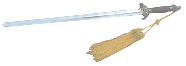

These intermediate/advanced forms are beautiful, interesting and graceful forms to practice. They provide an excellent adjunct to hand form by extending existing T’ai Chi balance & movement range.
We teach sword form for these values, and often a walking stick is substituted for the sword by those who dislike the weapon association.

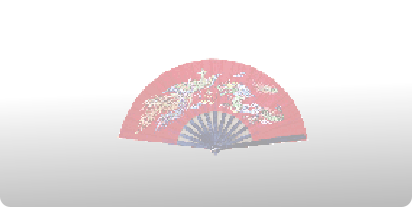
This intermediate level fan form was passed verbally by its creator to my teacher Sifu Dan Jones .
Although T’ai Chi Fan forms are primarily weapon forms, this version with its graceful, centred movements, and its predominant use of the “praying” position supplemented by thrusts and strikes, clearly reflects the opposites and harmony of Yin and Yang.
With an upright posture, its rotating arm and balancing movements provide complete exercise, and a powerful increase in Chi experience.
Click here to read Trevor’s account of learning fan form
at a Dr Lam Workshop
| Sifu Trevor |
| Assistants |
| Find a Session |
| Workshops |
| Events |
| Tai Chi for Energy |
| Talks |
| 1to1 Tuition |
| Our Classes |
| Training Us |
| Events & Workshops |
| Sword & Fan |
| Kidz |
| My Favourite Place |
| Info & Articles |
| Videos |
| Useful related websites |
| Testimonials |
| A T'ai Chi Poem |